Automotive Technology
EMCC – Certificate or AAS
Bangor –
Prerequisites
- Algebra I required
- Algebra II, Geometry, and either Physics or Chemistry with Lab desired. For a certificate, High School Level Algebra I required.
- For either the Degree or Certificate programs: A clean driving record and clean criminal history
EMCC does not currently conduct criminal background screening for applicants to Automotive Technology; however, individuals who have engaged in certain criminal activity could be denied access to gainful employment in their intended field. Additionally, licensing boards for certain professions may deny the individual the opportunity to sit for an examination if they have been convicted of certain crimes. Individuals who have engaged in any activity which may be considered abuse, neglect or exploitation of a minor or of an incapacitated or dependent adult, or who have been convicted of any crime involving fraud or dishonesty, or drugs, or for which imprisonment of on year or more has been imposed are urged to seek clarification from the Director of Admissions prior to an application submission.
The Automotive Technology program provides theoretical foundations, practical education, and work experience in the engineering, testing, servicing, troubleshooting, and repair of automobiles. Housed in a modern facility on campus, Penobscot Hall, with a fully-equipped shop the Automotive Technology Program emphasizes safety and employability. This program provides the theoretical foundation, practical education, and work experience in the troubleshooting, testing, service, and repair of modern automobiles. The program is accredited by the ASE Education Foundation in all eight areas of Automotive Repair. The curriculum follows the Foundation standards and instructs students in all aspects of automotive repair in the major automotive brands. (See ASE website for national standards).
EMCC Automotive Technology students will also study the Chrysler, Dodge, Jeep, Ram, and Fiat curriculum, becoming Mopar Career Automotive Program (CAP), level one certified technicians at the completion of the program. This affords the student the opportunity to work for a Mopar dealership, if they have a desire to, and begin doing warranty repair for the dealership on day one of their employment. Additionally, students may elect to place their name in the national database of MCAP graduates, affording them the opportunity to be recruited by dealers from across the nation. If you’re also interested in Mopar performance, visit their Performance Parts website.
The Automotive Technology Program also offers students the ability to participate in Subaru U. Unlike other OEM educational programs, Subaru-U is designed to create a unique partnership between Subaru of America, the retailer, and high performing ASE Education Foundation accredited secondary and post-secondary schools. By infusing Subaru’s Web-Based Training (WBT) into the existing curriculum, students have the ability to take most of the entry-level training that is required of all Subaru technicians.
Recent graduates of the program are employed as automotive services technicians, service managers, maintenance supervisors, service writers, warranty claims adjusters, and parts personnel.
A valid driver’s license and a clean criminal background are required in order to complete all graduation requirements. Failure to furnish a valid license may have an impact on employability in the field. Questions concerning this requirement should be directed to Richard Thomas, Department Chair, at rthomas@emcc.edu or 207.974.4805.
Visit our Facebook Page to learn more about our facilities and keep up to date with automotive program news.
Key Learning Objectives
Graduates with the Associate in Applied Science Degree will function at an entry‐level position for servicing, diagnosing, repairing, and creating work orders in the following areas:
- Explain and apply the legal requirements of OSHA, EPA and the State of Maine when performing the duties of a technician.
- Use acceptable public relations and customer service techniques.
- Diagnose, repair and document components of electrical/electronics, heating, ventilation and air conditioning.
- Diagnose, repair and document automotive engines and power train systems.
- Diagnose, repair and document components of automotive suspension and steering systems.
- Diagnose, repair and document components of hydraulic and anti‐lock brake systems.
- Analyze and complete a Maine state motor vehicle inspection.
Students are tested with standard written tests as well as hands‐on testing that coincide with the assigned textbook, NATEF standards, as well as industry standards in each area. Students must pass Automotive courses with a grade of C or higher to count for graduation. Visit the EMCC Catalog for more information about available courses.
Graduates will demonstrate proper public relations and customer service techniques for a fleet or dealer service facility. Graduates will demonstrate understanding and application of legal requirements including those of OSHA, EPA, and State of Maine regulations regarding the handling and disposal of hazardous materials and related safety issues.
Program starts each fall, with an option to begin general education classes in the prior spring. Students opting to take the certificate program will be required to complete the credits listed under the First Semester and the Second Semester.
Transfer agreements:
Benjamin Franklin Institute of Technology
| EMCC Degree | Transfer Degree |
| AAS Automotive Technology | BS Automotive Technology |
Calais
Certificates or AAS
Purpose: The Automotive Technology certificate program prepares students for the automotive service field. Through an intensive, shop-orientated course, students are introduced to the industry and learn to maintain automotive equipment. Emphasis is placed on understanding automotive principles and on learning to identify and solve vehicular problems. The course provides a solid background in the field, enabling students to continue to acquire skills and to keep up with changes.
Career Opportunities: Graduates of the program may accept positions in areas such as front-end alignment, brakes or general services. Automotive dealerships, independent repair facilities, companies with large vehicle fleets, and automotive parts supply stores are typical employers of program graduates.
Program Educational Outcomes: Upon completion of the certificate curriculum, the graduate is prepared to:
- Demonstrate safe work habits in compliance with industry standards set forth by the Mechanical Technology area of their concentration.
- Understand and apply principles of testing, diagnosis, and servicing of passenger and light commercial motor vehicles.
- Understand and apply basic principles regarding maintenance of automotive equipment.
- Identify and solve mechanical problems.
- Continue to update knowledge and skills about automotive technology in order to keep up with industry standards.
- Complete task in accordance with industry and NATEF/ASE certification standards.
- Apply theoretical knowledge of electronic and other test equipment in practical settings.
- Qualify for employment in positions including front-end alignment, brakes, or general services at automotive dealerships, independent repair facilities, companies with large vehicle fleets, and automotive parts supply stores.
Automotive Contact
Ron O’Brien
Automotive Instructor
207.454.1065
robrien@wccc.me.edu
Additional Certificate:
Engine Specialist 30-hour Certificate
Purpose: The Engine Specialist program prepares the students for employment in the engine servicing industry. Instruction covers diesel and gasoline engine theory and techniques of disassembly, inspection, reassembly, and troubleshooting. Technicians use shop manuals, reference charts, diagnostic instruments, and special tools to diagnose equipment malfunctions. Career preparation requires a solid technical background in the areas of engine overhaul, electrical and electronic systems, and fuel systems.
Career Opportunities: Graduates of this program may find employment as technicians with automotive service facilities, construction companies, logging companies, farm machinery dealers, heavy equipment dealers, marine engine companies, and farm operators. With experience, graduates may advance to shop supervisor, service manager, resident field service technician, master mechanic, technical representative, or sales representative. Some may become owners of service facilities.
Program Educational Outcomes: Upon completion of the certificate curriculum in the Engine Specialist certificate program, the graduate is prepared to:
- Demonstrate knowledge of the handling of hazardous materials, respiratory safety, fire safety, and first aid.
- Demonstrate knowledge of safety issues via OSHA certification as well as certifications in Red Cross First Aid and CPR.
- Understand and apply diesel and gasoline engine theory and techniques of disassembly, inspection, reassembly, and troubleshooting.
- Use shop manuals, reference charts, diagnostic instruments, and special tools to diagnose equipment malfunctions.
- Understand and apply knowledge required for repair and maintenance of engine overhaul, electrical and electronic systems, and fuel systems.
- Qualify for employment as technicians with automotive service facilities, construction companies, logging companies, farm machinery dealers, heavy equipment dealers, marine engine companies, and farm operators.
Engine Specialist Contact
Bion Holbrook
Engine Specialist Instructor
207.454.1075
bholbrook@wccc.me.edu
CDL Driver
Bangor
Choose Your CDL Training Program – A or B
CDL-A Training
Course Length: 160 Hours
Course Starts: Every 3 Weeks
CDL-A (Commercial Driver’s License – Class A) drivers are licensed to operate commercial trucks that tow detachable trailers filled with goods.
Truck drivers are one of the most in-demand careers available, today. And NTI has been Maine’s top CDL school for over 25 years.
Drivers mostly transport cargo across local and state lines under tight schedules.
The CDL-A program is designed to teach you safe operating procedures, and give you a working knowledge of the industry.
As a student, you’ll get practice behind-the-wheel at our driver training yards. And both country and city driving environments. You can become a licensed driver with 160 hours of logged training.
You’ll also have the opportunity to train for endorsements in air brakes, hazardous materials (optional), tankers, and doubles/triples.
CDL school graduates are prepared for licensure through the State of Maine’s Department of Transportation.
Entry-Level Driver Training (ELDT)
As part of a federal mandate, in order to take your state road test, you will need to provide proof that you have successfully completed a qualified ELDT program.
The CDL-A Commercial Truck Driver program at NTI is designed to meet all ELDT requirements. And the school is registered on the FMCSA’s Training Provider Registry (TPR).
Learn More About Entry-Level Driver Training
Hands-on CDL Training
Because trucking is a hands-on job, you’ll be trained by industry pros in fully equipped yards and classrooms. Above all, you’ll learn by doing.
To summarize, CDL-A program students get full training in:
- Pre-trip inspections;
- Truck engines & Transmissions;
- CDL examinations;
- Safety for CDL drivers (FMCC);
- Rules of the road;
- Professional development for CDL drivers;
- Logbooks and trip planning;
- Straight backing;
- Alley Docking;
- Parallel parking;
- Drop and hook;
- City, highway, and country driving.
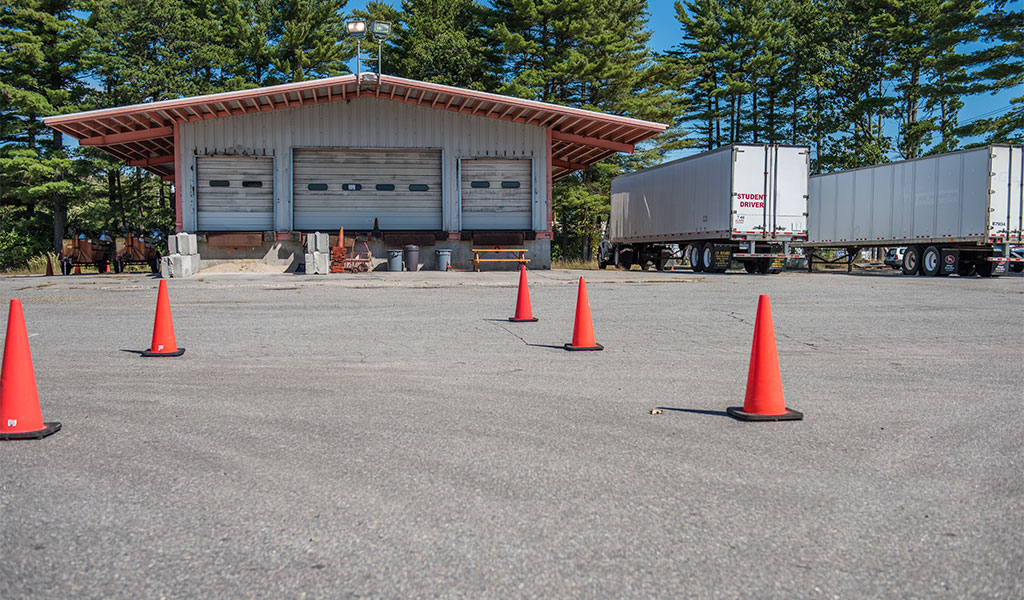
CDL Training Yards
You’ll receive part of your CDL training in a classroom, and the rest in our driver training yards. In addition, you’ll learn from licensed and experienced truck drivers.
Both training yards (located in Scarborough and Bangor, ME) are equipped with the trucks, trailers, and tools you’ll need to earn your license.
CDL-A Endorsements
Endorsements are a formal system of letting employers know how skilled you are.
CDL training endorsements include:
- Air Brakes;
- Tankers;
- Doubles;
- Triples;
- Hazardous Materials (optional).
CDL School Program Costs
The Maine Motor Transportation Association (MMTA) has partnered with Maine Savings FCU to implement a ZERO percent interest loan for tuition costs.
Program Basics:
- 100% financing of tuition costs (up to $7,000) of a CDL course through approved CDL schools;
- 0% interest rate;
- First payment deferred to 60 days after completion of course.
Apply For A 0% Interest Education Loan
Due to its short length, the CDL-A program is not yet eligible for Federal Financial Aid. But, NTI does offer a short-term payment plan for all students.
During your Admissions Interview, you’ll be given an overview of your tuition cost and ways to pay for school.
As a Commercial Truck Driver you’ll spend your workday:
- Maintaining vehicle and operation logs;
- Managing delivery paperwork;
- Loading and unloading cargo;
- Performing vehicle inspections before and after trips;
- And much more.
CDL-B Training
CDL-B (Commercial Driver’s License – Class B) drivers are licensed to operate commercial vehicles like buses, dump trucks, and box trucks.
Course Length: 80 Hours
Course Starts: Every 3 Weeks
Truck drivers are one of the most in-demand careers available, today. And NTI has been Maine’s top CDL school for over 25 years.
Drivers mostly transport cargo across local and state lines under tight schedules.
As a Commercial Truck Driver you’ll spend your workday:
- Maintaining vehicle and operation logs;
- Managing delivery paperwork;
- Loading and unloading cargo;
- Performing vehicle inspections before and after trips;
- And much more.
- CDL-B Training Program Description
- The CDL-B program is designed to teach you safe operating procedures, and give you a working knowledge of the industry.
- As a student, you’ll get practice behind the wheel at our driver training yards. And both country and city driving environments. You can become a licensed driver with 80 hours of logged training.
- CDL school graduates are prepared for licensure through the State of Maine’s Department of Transportation.
- Entry-Level Driver Training (ELDT)
- In order to take your State road test, you will first need to be certified by your Training Provider that you have successfully completed the ELDT program.
- The CDL-B Commercial Truck Driver program at NTI is designed to meet all ELDT requirements. And the school is registered on the FMCSA’s Training Provider Registry (TPR).
- Learn More About Entry-Level Driver Training
- Hands-on CDL-B Training
- Because trucking is a hands-on job, you’ll be trained by industry pros in fully equipped yards and classrooms. Above all, you’ll learn by doing.
- To summarize, CDL-B program students get full training in:
- Pre-trip inspections;
- Truck engines & Transmissions;
- CDL examinations;
- Safety for CDL drivers (FMCC);
- Rules of the road;
- Professional development for CDL drivers;
- Logbooks and trip planning;
- Straight backing;
- Alley Docking;
- Parallel parking;
- Drop and hook;
- City, highway, and country driving.
- Start Your Training Today
- CDL-B Training Yards
- You’ll receive part of your CDL training in a classroom, and the rest in our driver training yards. In addition, you’ll learn from licensed and experienced truck drivers.
- Both training yards (located in Scarborough and Bangor, ME) are equipped with the trucks, trailers, and tools you’ll need to earn your license.
- CDL School Program Costs
- The Maine Motor Transportation Association (MMTA) has partnered with Maine Savings FCU to implement a ZERO percent interest loan for tuition costs.
- Program Basics:
- 100% financing of tuition costs (up to $7,000) of a CDL course through approved CDL schools;
- 0% interest rate;
- First payment deferred to 60 days after completion of course.
Jump To Section…
Diesel, Truck and Heavy Equipment
Bangor
Diesel, Truck, and Heavy Equipment Repair and Maintenance –
Certificate or AAS
The Diesel, Truck, and Heavy Equipment Technology program provides theoretical foundations, practical education, and work experience in the engineering, testing, servicing, troubleshooting, and repairing of trucks, diesel engines, and heavy equipment. The program is ASE Certified, which ensures students that course content is pertinent to the needs of the industry. Recent graduates are employed as heavy equipment service technicians, sales personnel, service managers, maintenance supervisors, service writers, warranty claims adjusters, and parts persons.
Learning Objectives
Graduates with an associate degree in Applied Science Degree in Diesel, Truck, and Heavy Equipment will function at an entry-level position for servicing, diagnosing, repairing, and creating work orders in the following areas:
- Truck hydraulic and air braking systems as they pertain to heavy-duty trucks and heavy equipment
- Standard/automatic transmissions and final drives
- Diesel and heavy-duty gas engines
- Electronic and mechanical fuel injection systems
- Suspension systems
- Electrical and electronic systems
- Hydraulic systems
- Air conditioning systems
Graduates will demonstrate proper public relations and customer service techniques for a fleet or dealer service facility.
Graduates will demonstrate understanding and application of legal requirements including those of OSHA, EPA, and State of Maine regulations regarding the handling and disposal of hazardous materials and related safety issues.
The Diesel, Truck, and Heavy Equipment program is ASE Certified in eight areas, and the curriculum follows ASE standards, which helps students to prepare for the ASE technician certifications test.
A valid driver’s license is required in order to complete all graduation requirements. Failure to furnish a valid license may have an impact on employability in the field. Questions concerning this requirement should be directed to Lowell Gardner, Department Chair, at lgardner@emcc.edu or 207-974-4767.
EMCC does not currently conduct criminal background screening for applicants to Diesel, Truck, and Heavy Equipment Technology; however, individuals who have engaged in certain criminal activity could be denied access to gainful employment in their intended field. Additionally, licensing boards for certain professions may deny the individual the opportunity to sit for an examination if they have been convicted of certain crimes. Individuals who have engaged in any activity which may be considered abuse, neglect or exploitation of a minor or of an incapacitated or dependent adult, or who have been convicted of any crime involving fraud or dishonesty, or drugs, or for which imprisonment of on year or more has been imposed are urged to seek clarification from the Director of Admissions prior to an application submission.
Prerequisites
- Algebra I
Students opting to take the certificate program will be required to complete the credits listed under the First Semester and the Second Semester.
Calais
Heavy Equipment Maintenance and Heavy Equipment Operations
Heavy Equipment Maintenance and Heavy Equipment Operations programs prepare students for operations and maintenance jobs in the forestry, trucking, earth-moving, or construction industries. Through intensive shop and field oriented courses, students are introduced to a variety of heavy equipment and learn to operate and maintain, repair. and rebuild it. Emphasis is placed on the maintenance of drive train, running gear, external engine components, and hydraulic systems, as well as on the proper operation of bulldozers, trucks, pay-loaders, backhoes, and other heavy equipment.
Career Opportunities: Graduates of this certificate program may find entry level employment as heavy equipment operators or mechanics for construction companies, logging companies, farm operations, or equipment dealers.
Program Educational Outcomes: Upon completion of the certificate curriculum in this program, the graduate is prepared to:
- Demonstrate knowledge of safety issues via OSHA certification as well as certifications in Red Cross, First Aid, and CPR.
- Operate, maintain, repair, and rebuild a variety of heavy equipment.
- Maintain drive train, running gear, external engine components, and hydraulic systems.
- Properly operate bulldozers, trucks, pay-loaders, backhoes, and other heavy equipment.
- Qualify for employment as entry level operators or technicians for construction, logging, farm operations, or equipment dealers.
Tool List – Heavy Equipment Maintenance
Tool List – Heavy Equipment Operations
HEM Contact
Kevin Howland
HEM Instructor
207.454.1066
Kevin.howland@wccc.me.edu
Powersport Equipment/Small-Engine Technician
WCCC
Calais
Certificate – 29 credit hours
Program Information & Course List
Powersport Equipment & Small Engine Technician Tool List
Purpose: The Powersport Equipment/Small Engine Technician Certificate program was developed to train students as professional entry level outdoor power propulsion and small engine technicians through a combination of theory and hands on experience. The program prepares students to maintain and repair a variety of outdoor equipment. Students will be introduced to the skills and knowledge to be capable of diagnosing mechanical failures quickly and accurately on various types of two- and four-cycle small engines that are presently used to power lawn mowers, snowblowers, generators, garden tractors, rototillers, snowmobiles, ATVs, and personal watercrafts. Students who perform satisfactorily may find employment as service technicians, sales personnel, equipment rental staff, and factory representatives or may wish to open their own business.
Program Educational Outcomes: Upon completion of the Certificate in Mechanical Technology in Powersport Equipment/Small Engine Technician the graduate is prepared to:
- Demonstrate a foundation in theory, technology, equipment, safety and industry standards.
- Understand and apply basic principles of testing, diagnosis, and servicing of small engines, outdoor power equipment, recreational power equipment and power sport equipment.
- Understand and apply basic principles regarding repair and maintenance.
- Identify, diagnose and solve mechanical equipment/engine problems.
- Apply theoretical knowledge and skills, and complete repair and maintenance tasks in accordance with the Equipment and Engine Training Council (EETC) and the outdoor Power Equipment and Engine Service Association (OPEESA).
- Apply theoretical knowledge of electronic and other test equipment in practical settings.
- Demonstrate professionalism.
Interpret service information.
Powersport Equipment/Small Engine Technician Contact
Greg Johnson
Powersport Equipment/Small Engine Technician Instructor
207.454.1007
gjohnson@wccc.me.edu
EETC Certified Technician and EETC Program Accredited
Certificate – 29 credit hours
Semester 1
ENG 101 English Composition 3
FYE 100 First Year Experience 1
MET 103 Principals of Vehicular Electronics 2
MET 170 Small Engine Repair and Tune-up 3
MET 171 Power Equipment Drivelines/Hydraulics and Hydrostatics 3
MET 190 Recreational Vehicles Operation and Maintenance 3
Total 15
Semester 2
MAT 106 College Mathematics for Technologies 3
MET 195 Outdoor Powered Equipment Vehicle Repair and Maintenance 3
MET 172 Power Equipment Electrical Systems and Generators 3
MET 173 Marine and Personal Watercraft Repair and Maintenance 3
WEL 109 Introductory Welding 2
Total 14
 Hub 1 College & Career Program Options